
If your roof is leaking right now, act fast: move valuables and electronics out of the way, put a bucket under the drip, and where it is safe, pierce a small hole in any bulging ceiling to release trapped water in a controlled way. Then call a roofer. The sooner an active leak is dealt with, the less damage it does.
A roof leak is one of the few household problems that gets meaningfully worse by the hour. Water tracks along timbers, soaks insulation, stains ceilings and finds its way into electrics long before the source on the roof is obvious. This guide walks you through what to do in the first few minutes, the temporary fixes that genuinely help, what an emergency repair involves, and how to get a Mid Sussex roofer out to make the roof watertight again.

What do I do if my roof starts leaking in Sussex tonight?
Contain the water first, find the cause second. Move furniture and electricals clear, catch the drip in a bucket, lift carpets if water is pooling, and switch off the power to any affected circuit. Do not climb onto a wet roof in the dark, then arrange a roofer.
Working through it in order:
- Protect the inside of the house. Get electronics, soft furnishings and anything valuable out of the path of the water. Lay down towels or a plastic sheet to protect flooring.
- Control the drip. A bucket under a steady drip saves the floor and the ceiling below. If water is collecting in a ceiling and the plaster is bulging, a small pierced hole at the lowest point lets it drain in one controlled stream rather than bringing the whole ceiling down without warning.
- Kill the power if water is near electrics. If you can see water near light fittings, downlights or sockets, turn off that circuit at the consumer unit. Damp and electricity are a serious combination.
- Photograph everything. Pictures of the leak, the damage inside, and anything you can see outside from ground level all help later, both for the roofer’s diagnosis and for any insurance claim.
- Stay off the roof. Wet tiles and slates are dangerously slippery, and a roof that is already failing is not a safe place to be. Almost everything genuinely urgent can be done from inside or from ground level until a professional arrives.
How do I find where my roof is leaking?
Start inside, then check outside from the ground. Internal clues, such as where water enters the loft, ceiling stains and damp on chimney-breast walls, point to the rough area. The actual entry point is usually uphill of where the water shows inside, because water runs along timbers before it drops.
From inside the house
- In the loft: look for active drips, wet or stained rafters, damp insulation, and daylight where there should not be any. Track wet timber upwards to find where water is getting in.
- On ceilings and walls: brown or yellow staining, bubbling paint, and damp patches on the wall beside a chimney breast all point to where water is collecting.
- Remember water travels: the wet patch on the ceiling is rarely directly below the hole in the roof. Water can run several feet along a rafter or felt before it drops.
From the ground outside
- Use binoculars or your phone’s zoom to scan the roof. Look for slipped, cracked or missing tiles and slates, lifted or damaged flashing around the chimney and abutments, and any obvious storm damage.
- Check the gutters and downpipes: blocked or overflowing gutters push water back under the roofline and are a common hidden cause of roof leaks.
- Note anything pooling, sagging or out of line, then leave the close-up inspection to a roofer who can get up there safely.
What temporary fixes actually work in an emergency?
A securely weighted tarpaulin is the most effective temporary fix, buying time until a permanent repair can be carried out. Roofing tape and sealants help on small, accessible splits, but they are a stop-gap, not a cure, and most are far less effective on a wet surface in the rain.
Tarpaulins
A good-quality tarpaulin laid over the affected area and weighted or fixed down at the edges is the single most useful emergency measure. It keeps the bulk of the water out across a whole section of roof rather than relying on patching one exact spot. The catch is that fitting one safely usually means getting onto or close to the roof, which is exactly what most homeowners should not be doing in bad weather. If it is not safe, leave it for a roofer, who will often fit a temporary covering as the first thing they do on arrival.
Roofing tape and sealants
Self-adhesive flashing tape or a tube of roof-and-gutter sealant can slow a small, reachable leak, for example a hairline split in flat-roof felt or a gap you can reach from a loft hatch or upstairs window. Two honest limitations: most products bond poorly to wet or dirty surfaces, so they often will not stick mid-storm, and they only address the spot you can see, not the cause higher up. Treat them as buying a few hours, not as a repair.
A note on safety
Emergencies tempt people onto ladders and roofs in conditions where they really should not be. Wet tiles, gusting wind and failing materials make for a genuinely dangerous combination. Nothing on the roof is worth a fall. If a temporary fix cannot be done safely from the ground or a window, it is a job for a roofer with the right access equipment.
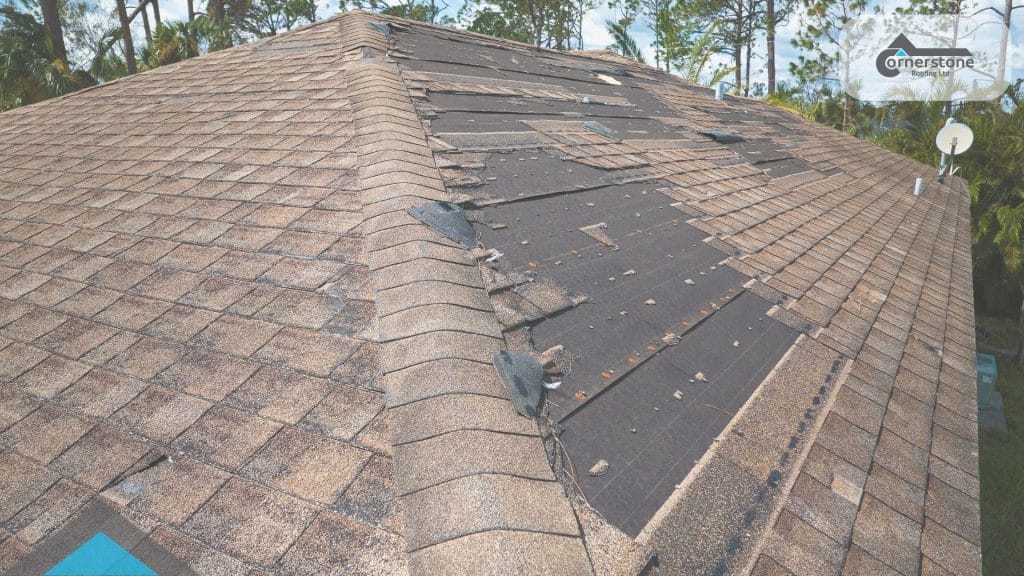
How much does an emergency roof repair cost in Sussex?
There is no flat rate, because the cost depends entirely on what is actually wrong. A couple of slipped tiles, a chimney flashing repair and a failed flat-roof section are very different jobs. Rather than quote a misleading ballpark, Cornerstone books a free visit, identifies the real cause, and provides a written quote before any work starts.
What moves the cost up or down:
- The cause and extent of the damage. A single slipped tile is a quick fix. Widespread storm damage, a failed flashing detail, or a leak that has been tracking for weeks and has soaked timbers or insulation is a bigger job.
- Access. A low single-storey extension roof is far easier and cheaper to reach than a steep two-storey pitch or a roof that needs scaffolding or a tower to work on safely.
- Whether a temporary make-safe is needed first. Where a permanent repair cannot be done immediately, often because of weather, a roofer will make the roof watertight first and return to complete the full repair, which means two visits rather than one.
- Repair versus replace. Localised damage on an otherwise sound roof is almost always cheaper to repair than to replace. If the roof is at the end of its life and repairs are becoming recurring, replacement can be the better long-term value, a judgement best made after an inspection.
The honest answer is that catching a leak early is the biggest cost saver of all. A small repair today is a fraction of the damage bill once water has been getting in for months.
Who do I call for an emergency roofer near me?
Call a local, insured roofer who covers your area and offers an emergency call-out. Cornerstone Roofing provides an emergency roof repair call-out service across Mid Sussex, prioritising active leaks and storm damage where the property itself is at risk.
When you are choosing who to call in a hurry, it still pays to check a few things:
- They are local and actually cover your area. A roofer based nearby can respond faster and knows the local housing stock. Cornerstone works across Mid Sussex from a base in Scaynes Hill, including Haywards Heath, Burgess Hill, Cuckfield and Hurstpierpoint.
- They are properly insured. Working at height on a damaged roof carries real risk. Make sure whoever you call carries appropriate insurance.
- They will make the roof safe first. A good emergency roofer’s first move is to stop the water getting in with a temporary covering, then diagnose and quote the permanent repair rather than rushing a patch.
- They put it in writing. Even after an emergency call-out, you should get a clear written quote for the permanent repair before that work goes ahead, so you know what is covered.
Emergency call-outs are prioritised over routine bookings, and the earlier you flag a leak, the easier and cheaper the repair usually is. The exact timing of any visit depends on workload, the weather and how urgent the situation is, with active leaks where the property is at risk sitting at the front of the queue.
How do I stop emergency roof leaks happening again?
Most emergency leaks start as small, ignored problems, so routine maintenance is the best prevention. Clear the gutters twice a year, have the roof checked after major storms, and book a professional inspection every few years. Prevention is far cheaper than reacting to a leak that is already inside the house.
The Mid Sussex weather is hard on roofs. The Weald sees heavy annual rainfall, winter freeze-thaw cycles that break down older mortar and porous tiles, and every named Atlantic storm that crosses Sussex stresses the roof system. Wooded villages add fast-growing moss and frequent gutter blockages. None of that can be switched off, but its effect on your roof can be managed:
- Clear gutters and downpipes in spring and autumn so water drains away from the roofline instead of backing up under it.
- Check the roof after every major storm, ideally from the ground, for slipped tiles, lifted flashing or debris.
- Book a professional survey every few years. A roofer spots the early-stage problems, such as a hairline flashing crack, a single cracked tile or perished mortar, that you cannot see from the ground, long before they become a 2am leak.
- Deal with small issues promptly. A slipped tile or a tired flashing fixed in daylight for a modest sum is far cheaper than the same problem left until it lets water into the house.
For a fuller maintenance routine, see our guide to spotting the early signs of roof damage.
Frequently Asked Questions
Is a roof leak always an emergency?
Not always, but treat it as one until you know otherwise. A fast-dripping or running leak, water near electrics, or a sagging, bulging ceiling all warrant an urgent call. A faint, occasional stain that only appears in heavy rain is less critical, but it still needs looking at soon, because small leaks become big ones. When in doubt, contain the water and get advice.
Will my home insurance cover emergency roof repairs?
It often depends on the cause. Many policies cover sudden, accidental damage such as a storm tearing tiles off, but exclude problems put down to wear, age or a lack of maintenance. Photograph the damage, keep any receipts for emergency make-safe work, and check your policy wording or call your insurer before committing to a permanent repair. A roofer can usually provide the written report and quote an insurer will ask for.
Can you tarp a roof in the rain?
Yes, an experienced roofer can fit a temporary covering in poor weather to stop water getting in, and that is frequently the first thing done on an emergency call-out. It is not a job to attempt yourself in a storm, though. Wet tiles and gusting wind make roof access genuinely dangerous, so the safe option is to contain the water inside and leave the covering to someone with the right equipment.
Do you offer emergency call-outs across Mid Sussex?
Yes. Cornerstone Roofing offers an emergency call-out service across Mid Sussex for active leaks, storm damage and roof failures that cannot safely wait. Where a permanent repair cannot be carried out the same day, often because of weather or the scope of the damage, the roof is made watertight first and the full repair is completed afterwards.
How quickly can a roofer come out to a leak?
Emergency call-outs are prioritised ahead of routine bookings, with active leaks that put the property at risk dealt with first. The exact timing depends on current workload, the weather and how urgent your situation is, so it varies case by case. The most useful thing you can do is report a leak as early as possible, the sooner it is flagged, the sooner it can be made safe.
Roof leaking and need it sorted? Contact our Mid Sussex roofing team for an emergency roof repair, and we will get your roof watertight again.