Common Causes of Chimney Roof Leaks
Erosion of Bricks and Crumbling Mortar in Older Chimneys
One of the main causes of chimney roof leaks is the gradual erosion of bricks and crumbling mortar. Older chimneys are particularly vulnerable to harsh weather conditions. Over time, the bricks and mortar joints deteriorate. Water can seep into the masonry and, during winter, freeze-thaw cycles can worsen the damage. When water freezes, it expands, causing small cracks to grow. With each rain and freeze, these cracks allow more water to infiltrate, further weakening the structure and leading to chimney leaks.
Eroded bricks and mortar can lead to significant moisture issues in your home, including water stains, mould growth, and structural damage. Prompt attention to eroding masonry can prevent minor problems from escalating into costly repairs. The best remedy is to repoint the mortar joints, replacing the old, crumbling mortar with a new mix.
Damaged or Deteriorated Flashing Around Chimney Base
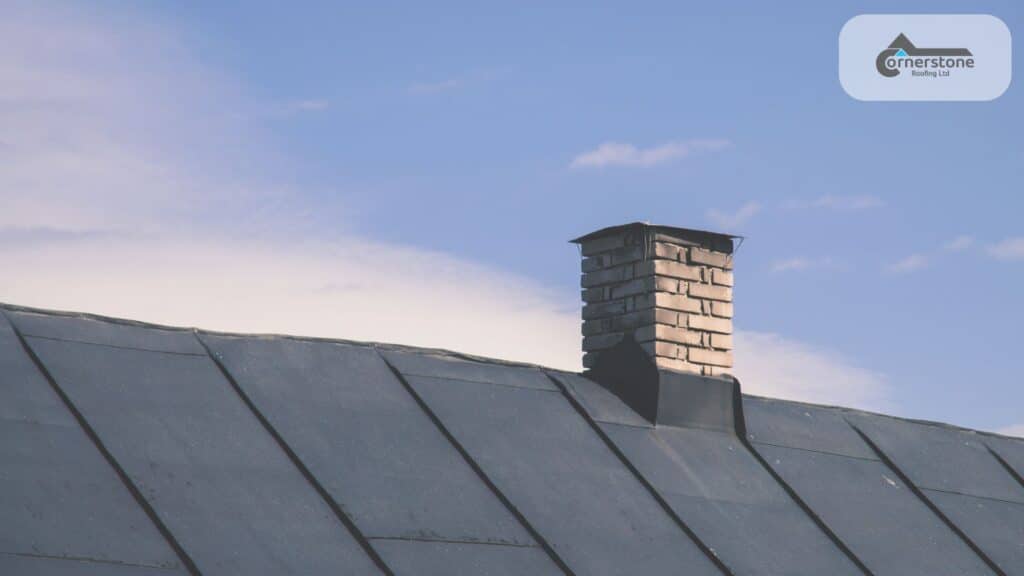
Another common cause of chimney leaks is damaged or deteriorated flashing. Flashing consists of metal sheets installed around the base of the chimney where it meets the roof. Its primary function is to create a watertight seal that prevents water from entering the roof structure. Over time, flashing can become loose, corroded, or damaged due to exposure to the elements, losing its effectiveness. Damaged flashing is a leading cause of chimney roof leaks and must be addressed promptly.
Signs of flashing issues include water entering the attic or ceiling, dripping sounds in the chimney, rust stains inside the firebox, and musty smells after rainfall. Effective repair typically involves resealing or replacing the flashing to restore its integrity. Most homeowners may find this task beyond their DIY capabilities, often requiring the expertise of a roofing contractor.
Cracks in Chimney Crown from Freeze-Thaw Cycles
Another reason for chimney roof leaks is related to cracks in the chimney crown, which are primarily caused by freeze-thaw cycles. The chimney crown, the top layer covering the chimney, protects the flue and chimney structure from water damage. Unfortunately, it often suffers from weather-induced stresses first. When water penetrates small cracks in the chimney crown and freezes, it expands, causing the cracks to widen. Over time, this cycle can lead to significant damage, creating pathways for rainwater to seep through.
These cracks can undermine the chimney’s structural integrity and allow water to leak into the home, causing moisture problems. Chimney crowns should be inspected regularly for signs of cracking, and repairs should be made early. Applying a breathable waterproof sealant can help protect the crown from water damage, but extensive cracks might require a complete rebuild for comprehensive protection.
Understanding these common causes is the first step towards preventing chimney roof leaks in your home. Proactive measures to inspect and maintain your chimney can save you from larger, more expensive repairs down the line. In the next section, we’ll explore how to effectively identify the source of these leaks.

Identifying the Source of Chimney Leaks
Water damage to chimneys can be a significant issue for homeowners, leading to expensive repairs if not addressed promptly. To prevent this, early detection of chimney roof leaks is essential. Here’s how you can effectively identify the source of chimney leaks.
Look for Water Stains and Drip Lines on Chimney Surfaces
The first step in identifying chimney leaks is to conduct a thorough visual inspection. Check for water stains or drip lines on both the exterior and interior surfaces of the chimney. Water often leaves behind stains, which can be visible as discolouration on the walls around the chimney or on the chimney itself. These stains can vary in colour from dark grey to rusty brown.
Signs of interior water damage include damp patches on walls and ceilings adjacent to the chimney, peeling wallpaper, or mould growth. Inspect the firebox as well; water in the firebox or musty odours are clear indicators of a leak. Don’t overlook white deposits on the bricks, known as efflorescence, which are mineral residues left by evaporating water.
Inspect Flashing Condition and Connection Points
One of the most critical areas to inspect is the flashing. Flashing is the metal barrier installed at the base of the chimney where it meets the roof, designed to prevent water from seeping in. It’s prone to damage over time due to weather conditions and the natural settling of your home.
Check for cracks, rust, or loose sections of the flashing. Damaged flashing often results in visible leaks and water stains inside the home or attic. An important tip is to routinely check the attic area where the chimney meets the roof to catch early signs of water ingress before it becomes a more serious problem.
Check Chimney Crown and Masonry for Visible Damage
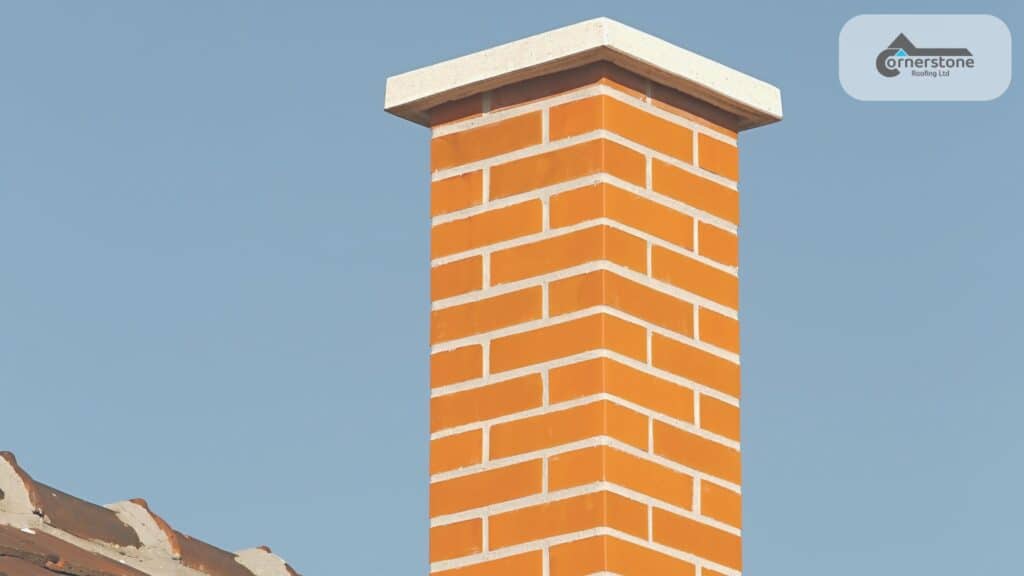
The chimney crown, the concrete cap atop the chimney, is another common entry point for water. It plays a vital role in shielding the chimney from harsh weather. However, over time, exposure to rain, ice, and fluctuating temperatures can cause the crown to crack, allowing water to seep into the chimney structure and cause damage.
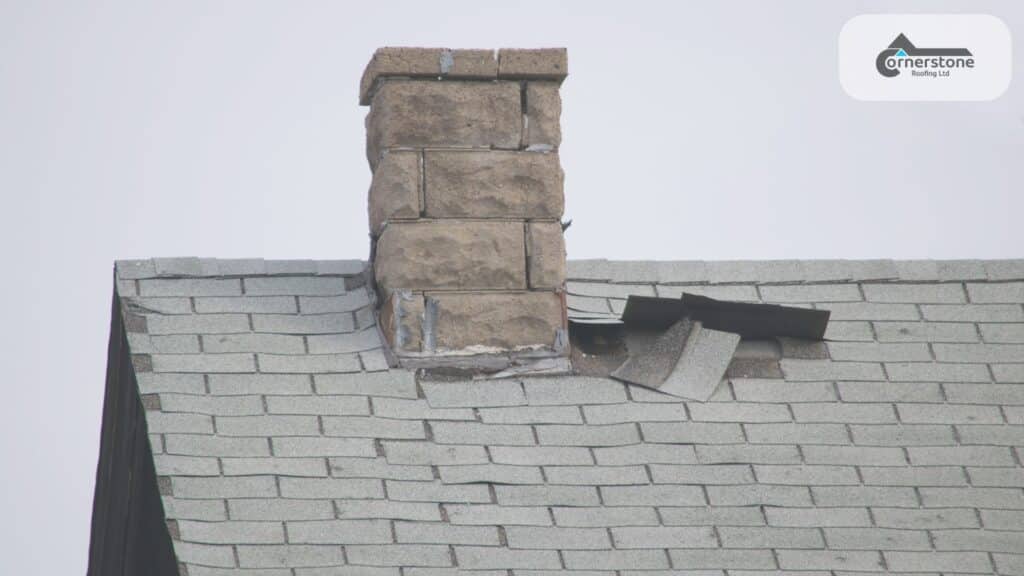
Inspect the chimney crown for visible cracks and deterioration. Look for loose or missing bricks, which may indicate spalling, where the brick surface breaks off due to moisture. Check the mortar joints between the bricks; if these are crumbling or missing, water can penetrate and cause further damage.
Signs of spalling bricks include rough or chipped surfaces, with pieces of the brick coming off and exposing the more porous inner layers. Addressing spalling bricks quickly is critical to prevent further deterioration.
Identifying these signs early and taking action can prevent small issues from escalating into major repairs. Timely inspections and maintenance are crucial for keeping your chimney in top condition.
What to Do When Your Roof Leaks Around the Chimney
When you notice water leaking around your chimney, it’s essential to act promptly to prevent further damage. Here’s a step-by-step guide on what to do when your roof leaks around the chimney:
Step 1: Identify the Source of the Leak
Begin by inspecting the area around the chimney. Look for visible signs of damage, such as missing shingles, damaged flashing, or cracks in the chimney crown. If you notice water stains inside your home, trace them back to your chimney to pinpoint the leak’s location.
Step 2: Temporary Measures
If you cannot address the leak immediately, take temporary measures to prevent further water intrusion. Cover the chimney with a waterproof tarp or plastic sheeting, securing it with heavy objects to withstand wind and rain. This temporary cover can provide a crucial barrier until professional help arrives.
Step 3: Call a Professional
It’s often best to consult a professional chimney specialist or roofing contractor to assess the situation. They possess the expertise to identify underlying issues and implement effective repairs. Attempting to fix complex problems without proper knowledge can lead to more significant damage.
Step 4: Document the Damage
If your home insurance covers roof leaks, document the damage extensively. Take photographs of the affected areas, including the chimney, roof, and any interior damage caused by the leak. This documentation will be helpful when filing a claim.
By following these steps, you can effectively manage a leak around your chimney and mitigate potential damage to your home.
Immediate Temporary Solutions
When chimney leaks demand immediate attention, temporary solutions offer a lifeline. These quick fixes act as a stopgap to prevent further damage while you arrange for a professional to conduct thorough repairs. Several effective methods can be employed to protect your chimney against leaks.
Apply Roofing Sealant or Cement Around Damaged Flashing
One of the main suspects in chimney roof leaks is damaged or deteriorated flashing. Over time, the flashing, which forms a watertight seal between the chimney and the roof, can develop gaps or cracks due to weathering or poor installation. To temporarily fix this issue, using roofing sealant or cement is essential.
Start by cleaning the area around the flashing to remove debris and ensure a firm bond for the sealant. Apply the roofing sealant generously around all the edges of the flashing. This can be done with a caulking gun by cutting the tip to create a 1/4-inch bead of sealant, then running it evenly along the seams. Ensure you also seal any loose edges of the flashing, reattaching them if necessary with masonry screws before applying the additional sealant. This provides a temporary seal to stop water from seeping in.
Use Masonry Water Repellent for Brick Protection
Brick chimneys are susceptible to water damage as they are porous materials that can absorb moisture. An effective way to safeguard the chimney from further erosion and deterioration is by applying masonry water repellent. Unlike sealants that trap moisture, a water repellent allows the bricks to breathe while preventing water ingress.
The best practice is to apply the water repellent with a sprayer, starting from the bottom of the chimney and working your way up. This technique allows the repellent to run down naturally, ensuring thorough coverage. Products like Chimney Saver or LastiSeal are recommended for their breathable properties and long-lasting protection.
Install Temporary Covers or Barriers During Severe Weather
Certain weather conditions can exacerbate chimney leaks, so taking immediate protective measures is crucial during harsh weather. Installing temporary covers or barriers can significantly reduce water intrusion during storms or heavy rainfall.
One practical solution is to use a waterproof tarp or plastic sheeting to cover the chimney’s top securely. This can be held in place with bricks or heavy objects to prevent it from being swept away by the wind. For severely damaged chimneys, a temporary cover also helps mitigate further damage and water exposure, buying you time to arrange professional repairs.
Professional Repair Options
When DIY solutions and temporary fixes won’t suffice, it’s crucial to seek professional help to ensure the longevity and efficacy of your chimney repairs. Different types of specialists can address various aspects of chimney maintenance and repair to ensure your chimney’s integrity and functionality. Here, we discuss the roles of chimney specialists, roofing contractors, and masonry experts in providing comprehensive repair solutions.
Chimney Specialists for Comprehensive Repairs and Maintenance
Chimney specialists offer a wide range of services designed to maintain and restore your chimney to its optimal condition. They are skilled at inspecting your chimney to diagnose issues accurately, performing necessary cleanings, and conducting repairs. Here are some of the key services they provide:
- Chimney Inspections: Regular inspections ensure that any minor issues are caught before they escalate into significant problems. A comprehensive inspection can uncover hidden damages that might be missed by an untrained eye.
- Masonry Repairs: This includes repointing deteriorating mortar, replacing damaged bricks, and addressing structural issues within the chimney. Specialized masons have the necessary skills to handle various masonry challenges.
- Chimney Sweeping: This fundamental service removes built-up soot and creosote, which can be potential fire hazards. An annual sweep keeps your chimney clean and functioning safely.
- Liner Repair or Replacement: If your chimney liner is cracked or deteriorated, specialists can repair or replace it to improve your chimney’s efficiency and safety.
- Waterproofing: Applying waterproof treatments to your chimney exterior helps prevent water penetration and subsequent damage caused by freeze-thaw cycles.
Investing in chimney specialists ensures that all aspects of your chimney are professionally evaluated and treated, promoting a healthy and long-lasting chimney system.
Roofing Contractors for Flashing Replacement and Integration
Flashing is a critical component in preventing water from seeping into the intersection of your chimney and roof. When flashing deteriorates or gets damaged, it can lead to significant water leaks and damage. Here’s how roofing contractors can assist:
- Flashing Replacement: Damaged or old flashing needs to be replaced to maintain a waterproof seal around your chimney. This might include replacing materials such as aluminium, copper, or galvanised steel, depending on your roof’s requirements.
- Integration with Roofing Materials: Proper integration of flashing with the existing roofing materials ensures a seamless barrier against water. Contractors have the knowledge to blend these materials effectively.
- Custom Flashing Solutions: For unusual or complex chimney structures, roofing contractors provide custom flashing solutions that ensure durability and efficiency. Continuous flashing, while more labour-intensive and costly, may be more appropriate for specific configurations due to its higher durability and protection.
Hiring a roofing contractor ensures that the flashing around your chimney is robust and properly integrated with your roof, thereby preventing leaks and water damage.
Masonry Experts for Brick and Mortar Repairs
Masonry experts are essential for maintaining the structural integrity and aesthetic appeal of your chimney. Over time, bricks and mortar can erode and deteriorate due to various factors such as weather conditions, age, and lack of maintenance. Here’s how masonry experts can help:
- Brick Repointing: This process involves replacing old and crumbling mortar with new mortar, which helps restore the strength and appearance of the brickwork.
- Brick Replacement: If bricks are severely damaged or have spalled, they need to be replaced to maintain the integrity of the chimney structure.
- Crown Repairs: The chimney crown, often damaged by freeze-thaw cycles, needs to be repaired to prevent water penetration. This might involve sealing cracks or rebuilding the crown entirely.
- Comprehensive Masonry Work: Beyond spot repairs, masonry experts can perform extensive restorations and rebuilds as needed, depending on the extent of the damage.
Engaging masonry experts for your chimney repair ensures that your brickwork and mortar are restored to their original condition, thereby extending the lifespan of your chimney.
Professionals with expertise in chimney maintenance and repairs provide comprehensive solutions that go beyond temporary fixes. By addressing the root causes of chimney problems, their services help maintain a safe and functional chimney for years to come.
Preventative Maintenance
Preventative maintenance is crucial in ensuring that your chimney remains in excellent condition and free from chimney roof leaks. Regular checks and timely repairs help avoid costly fixes in the long run. Here are some key steps for effective preventative maintenance:
Regular Chimney Inspections and Cleaning
One of the most important preventative measures is to have your chimney inspected and cleaned regularly. This should be done at least once a year by a certified chimney sweep. Such inspections allow professionals to:
- Identify and remove any obstructions, such as bird nests or debris, that could block the chimney.
- Spot signs of damage, including cracks, deteriorated mortar, and missing bricks, which could lead to chimney leaks.
- Assess the condition of the chimney crown, cap, and flashing, ensuring they are in good condition.
Regular sweeping removes creosote buildup, which is highly flammable and hazardous. It also ensures that smoke and harmful gases can exit your home safely, preventing potential health risks.
Waterproofing Treatments for Masonry Protection
Chimneys are constantly exposed to harsh weather conditions, which can lead to water infiltration. Applying a waterproofing treatment is an effective way to protect the masonry. A chimney professional can apply a breathable waterproof sealant, such as Chimney Saver, which repels water and prevents moisture from penetrating the bricks while allowing any trapped moisture to escape. This treatment protects against:
- Freeze-thaw cycles that cause cracks in the chimney crown.
- Erosion of bricks and crumbling mortar due to constant exposure to rain and snow.
- Overall deterioration of masonry, which can lead to structural damage and leaks.
Prompt Repair of Minor Issues Before They Worsen
Addressing minor repairs promptly can save homeowners from extensive and costly damage later on. Regular inspections aid in detecting these minor issues early. Some common minor repairs include:
- Repointing Mortar: Repairing the joints between bricks to ensure stability and prevent water ingress.
- Flashing Maintenance: Repairing or replacing damaged flashing around the chimney base to maintain a watertight seal.
- Installing or Replacing Chimney Caps: Caps prevent rain, snow, and debris from entering the chimney while also blocking birds and animals from nesting inside.
In summary, preventative maintenance through regular inspections, thorough cleaning, appropriate waterproofing treatments, and early repairs of minor issues plays a significant role in maintaining a safe and efficient chimney. These steps help prevent chimney roof leaks and prolong the life of your chimney, ensuring that it continues to function correctly for years to come.
Conclusion
Understanding the causes, solutions, and preventative measures for chimney roof leaks is essential for every UK homeowner. Regular maintenance and prompt repairs can save you from expensive damage in the future. If you notice a leak around your chimney or if it has been a while since your last inspection, don’t hesitate to reach out to a chimney specialist.
Take control of your chimney maintenance today to ensure a safe and efficient home environment!